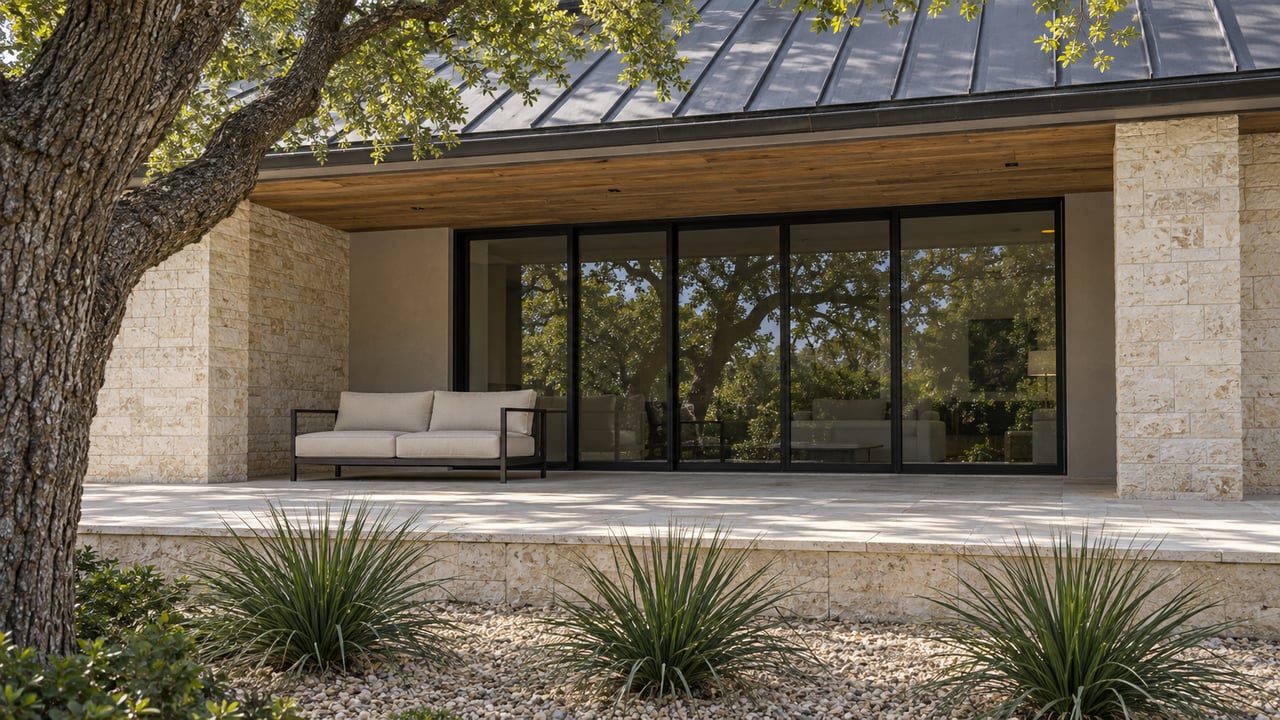
Most buyers touring Spanish Oaks assume the golf course comes with the address. The gate is guarded. The fairways run past the back windows of half the homes in the community. The clubhouse sits close enough to see from several streets. It would be reasonable to think that closing on a lot inside those gates settles the golf question too.
It doesn't. Spanish Oaks Golf Club runs its own admission process, entirely separate from the real estate transaction, and a signed deed carries no weight with the membership committee. For a buyer who has already mentally moved into a Tuesday tee time, that gap between owning the house and joining the club is the single most consequential detail of buying here, and it's the one that gets discovered latest, usually after the offer is already in.
The Two Applications
A home purchase in Spanish Oaks moves through the usual channels. Title work, inspection, HOA resale certificate, closing. None of that touches the golf club.
Membership runs on a second track that starts with sponsorship. An existing member has to put your name forward. From there, the process typically involves a formal application, an interview, and approval from the club's board or membership committee. The club has historically kept its golf membership capped in the neighborhood of 300 to 400 members. Buying the lot next to the 14th fairway does not create an opening on the roster, and it does not obligate the club to create one for you.
This matters most for buyers who choose Spanish Oaks specifically for daily golf access. If that's the plan, the club conversation needs to start before the home search does, not after the closing table.
What Membership Actually Costs
Every source that publishes numbers on Spanish Oaks membership pricing lands in a slightly different place, which is itself a useful data point. Published estimates for full golf membership initiation range from roughly $75,000 on the low end to $200,000 or more, with the higher figures showing up in more recent guidance. Monthly dues estimates run from around $1,000 to $2,000. Social membership, for buyers who want clubhouse and pool access without golf privileges, tends to start lower, often cited in the $25,000 to $75,000 range for initiation.
None of these figures are quotable to the dollar. They shift with club policy, waitlist status, and the year they were published. Treat every number here as a planning range, not a price sheet, and confirm current figures directly with the club's membership office before writing an offer that assumes a specific cost.
What is consistent across every source is the structure of the bill:
| Cost Category | Typical Range | Paid To |
|---|---|---|
| HOA dues | $3,000 to $5,000 per year | Homeowners association |
| Club initiation fee | Roughly $75,000 to $200,000+ | Spanish Oaks Golf Club |
| Club dues | $1,000 to $2,000+ per month | Spanish Oaks Golf Club |
The HOA fee covers community maintenance, the guard gate, and road upkeep. It has nothing to do with the club and is owed whether or not you ever set foot on the course. The club fees are a second, separate obligation on top of it.
The deed transfers ownership of the lot. It does not transfer a tee time.
What the Numbers Say About the Neighborhood Itself
Look at Bee Cave's citywide numbers and Spanish Oaks looks like an outlier that got mixed in by mistake. As of July 2026, the median home price across Bee Cave sits at $912,500. Spanish Oaks alone has carried a trailing twelve-month median sale price in the $3.3 million to $3.5 million range through the middle of 2026, depending on the reporting window. That is not a premium neighborhood inside a mid-priced city. It is functionally its own market, priced independently of the town that surrounds it.
The pace tells a related story. Spanish Oaks homes have been taking somewhere between 112 and 163 days to sell, well above the 48 to 52 day national average cited alongside those figures. A market that moves this slowly is not necessarily soft. It is thin. Inventory in the neighborhood typically sits in the single digits at any given time, and when a true estate-level property does list, it often resets expectations for the whole community rather than blending into an existing range.
For a buyer, the slow pace is not a warning sign. It's runway. A four to five month sale cycle gives a serious buyer enough time to run the club's sponsorship and application process in parallel with the home search, rather than scrambling to start it after signing a contract that assumed the golf was already settled.
When to Start the Club Conversation
The order of operations that avoids disappointment looks like this. Before writing an offer, or as early in the search as possible, reach out to the club's membership office directly and ask two questions: what is current admission status, and who among the club's members might be positioned to sponsor an application. Sponsorship is not something a buyer can manufacture on short notice, so the earlier that conversation starts, the more it can run alongside the home search instead of behind it.
Buyers whose interest in Spanish Oaks is really about privacy, the Hill Country setting, and the neighborhood's gated trails rather than daily golf have another honest option: skip the club membership entirely. The community includes amenities that don't require club admission, including the Fish Camp, a private lake area, and miles of trail. Plenty of residents live inside the gates and never join.
For buyers who do want the course, budget the initiation fee and dues as a distinct financial commitment with its own timeline, separate from the mortgage and separate from the HOA. Some clubs expect initiation payment within a set window after closing rather than allowing it to be deferred indefinitely, so treat that fee the way you would treat a second closing cost rather than an optional add-on to revisit later.
For Sellers, the Same Separation Applies
The two-track structure cuts both ways. A seller's own club membership does not automatically convey to a buyer, and it should never be marketed as though it does. If a listing benefits from mentioning proximity to the Bobby Weed-designed course or the clubhouse dining room, that's fair context about the neighborhood. Implying that membership comes with the sale is not, and it creates exactly the kind of confusion at the closing table that a well-prepared transaction is supposed to avoid.
A Few Questions Worth Asking Directly
Does buying a home in Spanish Oaks include golf club membership? No. The club and the community are governed separately. Ownership inside the gates does not grant membership, and it does not guarantee eligibility.
Is club membership required to live in Spanish Oaks? No. Residents can choose not to join and still have access to community amenities like the trail system and Fish Camp that fall under the HOA rather than the club.
How long does club admission typically take? The timeline depends on sponsorship availability and current waitlist status, both of which change. The only reliable way to get a current answer is to ask the membership office directly, ideally before a home is under contract.
If Spanish Oaks is the neighborhood you're circling, the house and the club deserve two separate conversations, run on two separate timelines, with two separate budgets. Working through both at once, calmly and in the right order, is exactly the kind of groundwork Greg Walling handles for buyers before an offer ever gets written. Schedule a private consultation to start both conversations at the same time.
This article is general information, not legal, tax or financial advice. Consult a qualified professional about your situation.