Thinking about transforming your place in Barton Creek but unsure if a full rebuild or a thoughtful remodel makes more sense? You are not alone. In a gated, amenity-rich community with Hill Country terrain, the right call depends on your lot, your goals, and your tolerance for time and disruption. In this guide, you will compare costs, approvals, timelines, and practical logistics tailored to Barton Creek so you can move forward with clarity. Let’s dive in.
Barton Creek decision: build new or remodel
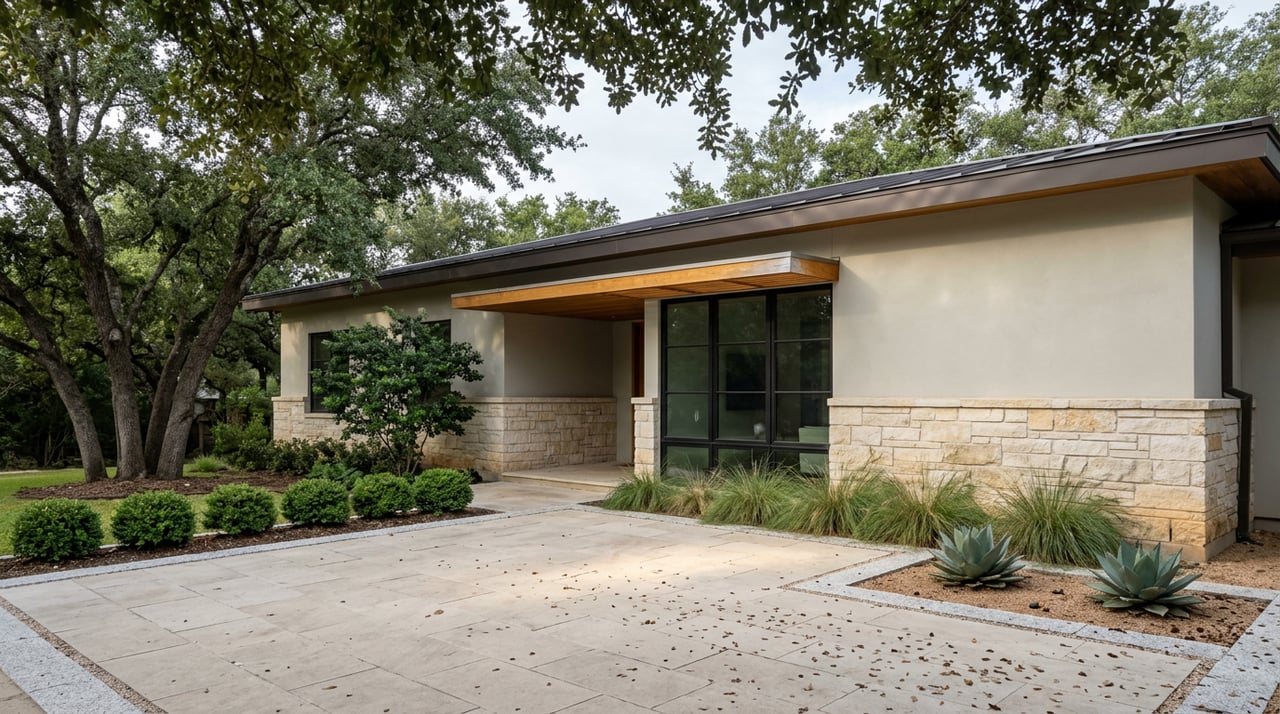
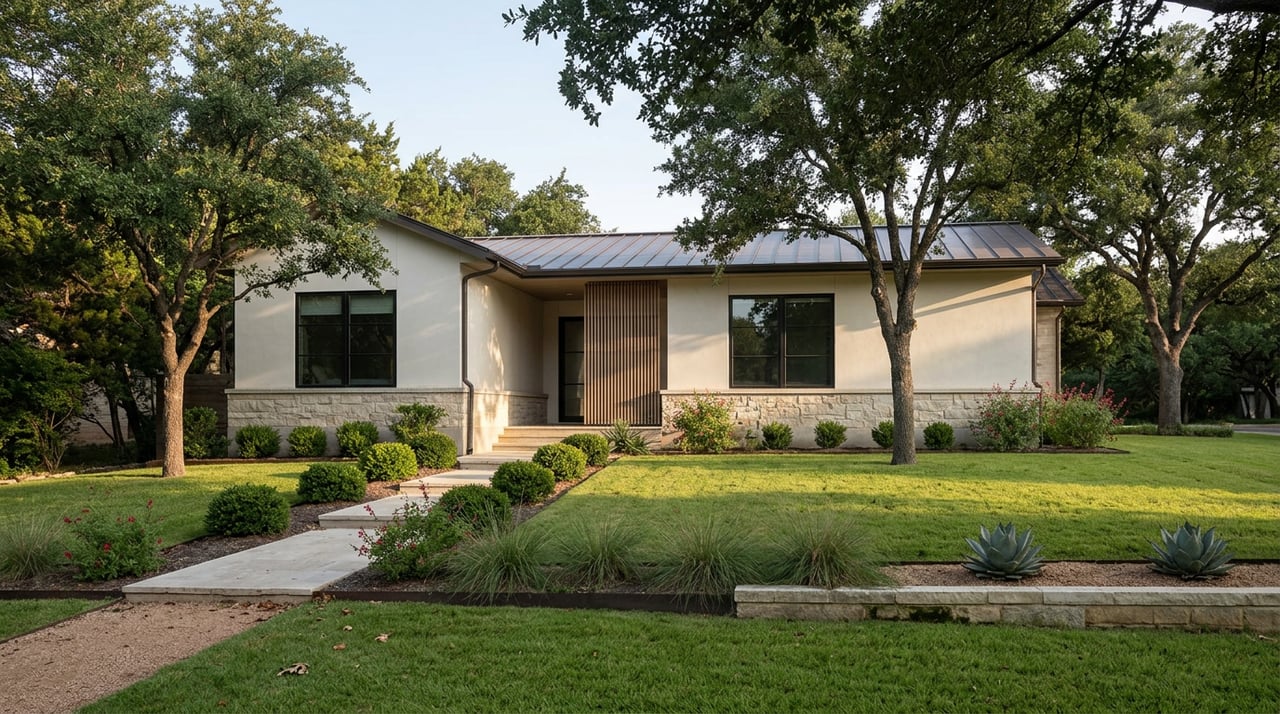
Barton Creek homes sit on prized lots, often with slopes, heritage trees, and striking views. That beauty brings constraints and costs. Start by focusing on your end goal and the site’s realities.
- Choose a remodel if you want targeted changes, faster completion, and lower upfront cost. Cosmetic updates or moderate plan tweaks typically fit here.
- Choose a rebuild if you want a modern floor plan, major structural changes, and finishes that match neighborhood expectations. Rebuilds can deliver better long-term value but require more time and budget.
- Let the lot guide you. Steep slopes, protected trees, drainage patterns, and rock outcrops can limit additions and push structural costs. Some lots make remodels simpler than new builds, and vice versa.
- Align with Barton Creek standards. Buyers expect high-end fit and finish. A remodel that stops short of neighborhood norms may have lower ROI than a full reimagining.
Start with site and rules
Verify jurisdiction and utilities
Your first checkpoint is jurisdiction. Parts of Barton Creek fall inside Austin city limits while others are in unincorporated Travis County. This changes building codes, permit offices, environmental rules, impact fees, and review timelines. Confirm early through parcel or tax records. Also verify water and sewer access, and whether the home is on septic. Utility availability and hookups can shift both cost and schedule.
Understand HOA and ARC
Most Barton Creek sections have CC&Rs and an Architectural Review Committee. Expect design standards for exterior style, materials, rooflines, colors, fences, driveways, pools, and sometimes HVAC or solar locations. Many projects must secure ARC approval before filing municipal permits. Plan for application fees, construction deposits, and compliance inspections.
Trees, slopes, and drainage
Large oaks and protected species typically require permits or mitigation plans. Tree preservation can shape building footprints, additions, and pool placement. Hillside rules and drainage constraints are common on sloped lots. A geotechnical report and civil drainage plan help you avoid costly surprises and rework.
Costs: what to budget in Barton Creek
Your total investment includes hard construction costs, soft costs, and carrying costs. Site complexity and finish level drive outcomes.
New custom home ranges
- Construction cost: approximately $250–$500 per sq. ft. for mid to high-end finishes. Complex sites or luxury features can run $400–$700+ per sq. ft.
- Site prep: steep-lot grading, retaining walls, or rock removal can add $30,000–$200,000+ before vertical construction.
- Soft costs: architecture, engineering, permits, impact fees, surveys, and inspections commonly add 10–20% of construction.
- Contingency: plan 10–15% minimum. Consider 15–20% for complex lots or longer schedules.
Major remodel ranges
- Whole-house, substantial structural changes: typically $150–$350+ per sq. ft. Finish level and foundation or structural rework push the high end.
- Additions: often $150–$400+ per sq. ft. depending on structure, systems, and foundation work.
- Targeted projects: kitchens can range from $20,000–$150,000+, and primary baths from $15,000–$80,000+ based on scope and customization.
- Contingency: plan 15–25% due to hidden conditions like old wiring, moisture damage, or drainage issues.
Pools and outdoor amenities
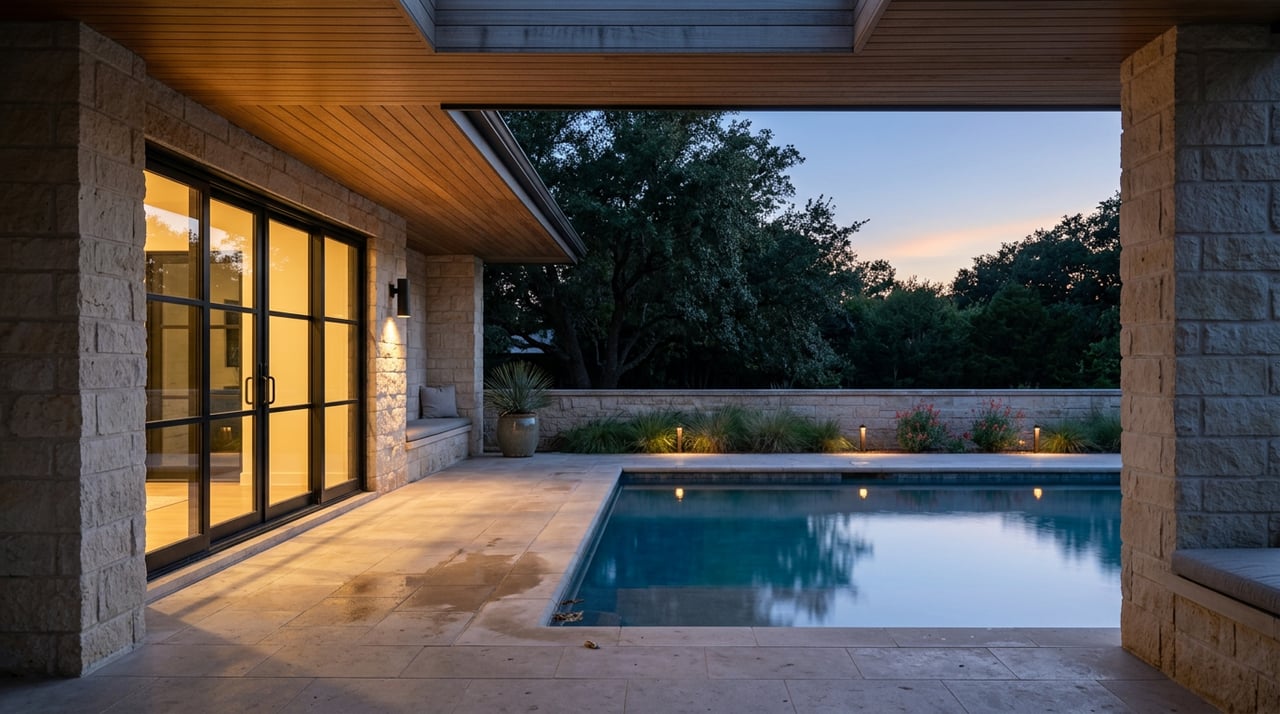
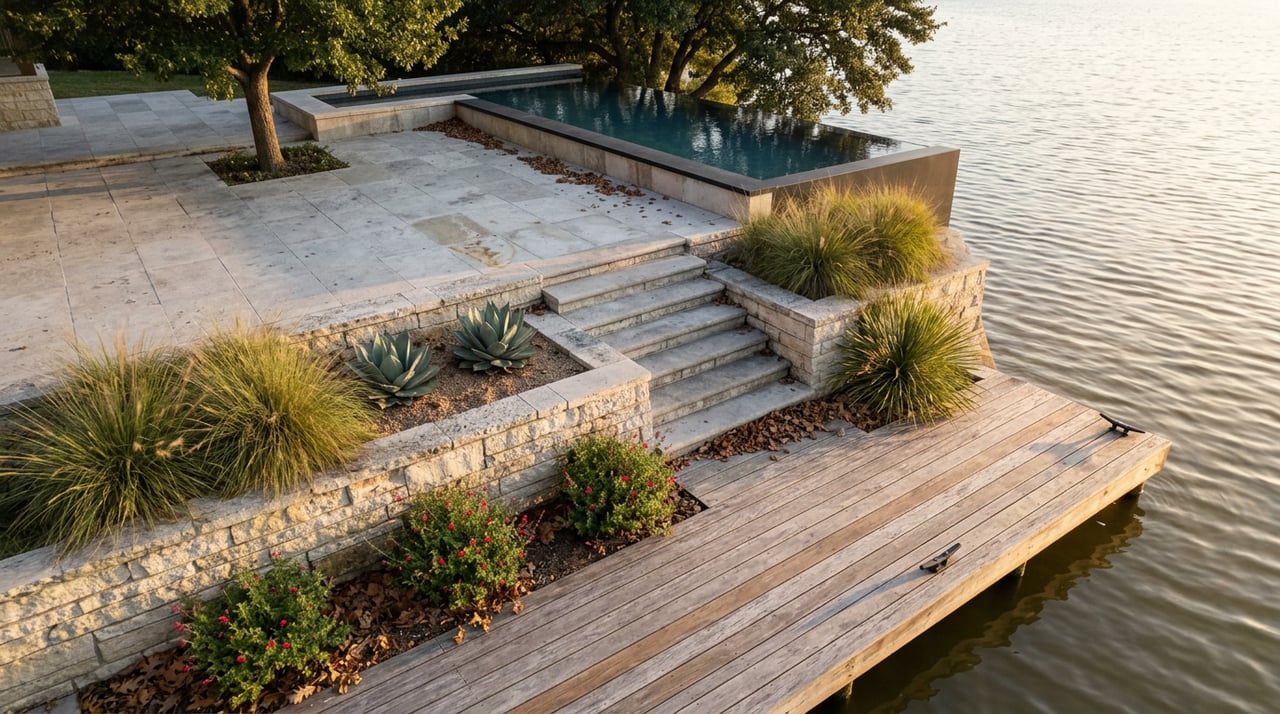
In-ground pools commonly run $50,000–$150,000+. On sloped lots, structural retaining and expansive decking can raise costs further. Pool placement may be limited by ARC and hillside rules.
Carrying and finance-related costs
Budget for property taxes, HOA dues, insurance, interim housing if you vacate, interest on construction or renovation loans, and inspection or testing fees. These often sit outside your builder’s contract but affect total cost.
Approvals and permits: what to expect
Typical sequence in Barton Creek
- Confirm jurisdiction, utilities, CC&Rs, and ARC guidelines.
- Hold pre-application meetings with the ARC and municipal staff to flag issues early.
- Build your team: architect, civil and structural engineers, surveyor, geotechnical engineer, and arborist as needed.
- Prepare the ARC submittal package with site plans, elevations, materials, landscaping, tree protection, and drainage.
- Submit to ARC. Review cycles typically run 2–6 weeks, sometimes longer if revisions are required.
- File municipal permits after ARC approval. Expect building and site permits, plus septic or sewer permits and pool permits if applicable.
- Post deposits and bonds. Install tree protection and erosion control before site work.
- Complete inspections during construction. For new homes, obtain a Certificate of Occupancy at the end.
Common reports and consultants
- Boundary and topographic surveys for slope analysis
- Geotechnical report for foundations and retaining walls
- Civil site and drainage plans with erosion and sediment controls
- Arborist inventory with protection and mitigation plan
- Landscape plans that meet ARC or municipal standards
Timelines: from idea to move-in
Schedules vary by scope, site complexity, and review backlogs. Build in cushion for review cycles and procurement.
New home phases and durations
- Feasibility and pre-design: 2–6 weeks
- Schematic design and ARC pre-submittal: 4–12 weeks
- Construction documents: 8–16 weeks
- ARC review: 2–8 weeks
- Municipal permits: typically 2–12+ weeks depending on jurisdiction and completeness
- Construction: 9–18 months, extending to 18–24 months on complex lots or with supply delays
- Final inspections and occupancy: 2–4 weeks
Remodel phases and durations
- Design and permitting: 4–12 weeks depending on structural scope
- ARC review: 2–6 weeks if required
- Municipal permits: 2–8 weeks on average
- Construction: 3–9+ months depending on depth of remodel; single-room projects can run 1–8 weeks
Schedule risks to plan around
- ARC revisions and re-reviews
- Tree protection, hillside constraints, and drainage redesigns
- Permit backlogs in high-growth cycles
- Long-lead materials like windows, custom cabinetry, appliances, and structural steel
Vendor coordination inside the gates
Access, staging, and hours
Gated entry means contractor passes, security check-ins, and scheduled deliveries for large loads. HOAs often direct where dumpsters, staging areas, and portable restrooms may sit. Expect defined work hours and noise limits. Good neighbor communication reduces friction.
Contractor credentials and deposits
Require proof of insurance, licenses, and any HOA contractor registrations. Some associations collect refundable deposits for potential cleanup or damage. Clarify gate or vendor pass fees and who pays them.
Procurement and lead times
Specialty windows, appliances, custom cabinetry, and engineered trusses can require months. Lock selections early and align orders with the draw schedule to avoid idle time.
Safety and environmental sensitivity
Tree protection fencing and designated root zones are often required. Erosion controls protect nearby creeks and golf corridors. Plan for traffic changes around neighboring drives and community events.
Financing and carrying costs
Construction loans typically require approved plans, budgets, a qualified builder, and inspections for each draw. Renovation financing can include cash-out refinances, home equity lines, or dedicated renovation loan products. Each option has unique appraisal, reserve, and draw requirements. Build in allowances for interest during construction and for possible tax assessments after completion, especially for major additions or new homes.
A simple decision path
Use this outline to reach a confident yes on rebuild or remodel:
- Define your must-haves and nice-to-haves, including timeline and disruption tolerance.
- Verify jurisdiction, sewer or septic, and pull CC&Rs and ARC guidelines.
- Commission a boundary and topo survey. For sloped lots, order a geotechnical report early.
- Meet informally with the ARC and a municipal planner to surface red flags before you design.
- Engage an architect and civil or structural engineers for a rough concept aligned with site limits.
- Obtain early budget ranges from two to three local builders with similar Barton Creek or Hill Country experience.
- Build a complete budget that includes soft costs, carrying costs, and a 10–25% contingency depending on scope.
- Decide on remodel or rebuild, then sequence ARC submittal, municipal permits, and procurement.
Ready to weigh options with a local guide?
Choosing between building new and remodeling in Barton Creek is part numbers, part neighborhood expectations, and part patience. If you want a calm, private sounding board and a clear plan tailored to your lot, your goals, and the Barton Creek standards, reach out to Greg Walling. Schedule a private consultation and move forward with confidence.
FAQs
What costs should I expect to build new in Barton Creek?
- New custom construction commonly ranges $250–$500 per sq. ft., rising to $400–$700+ with luxury features or complex sites, plus 10–20% for soft costs and 10–15% contingency.
How do remodel costs compare to a full rebuild?
- Major remodels often run $150–$350+ per sq. ft. with a 15–25% contingency, while rebuilds cost more upfront but can deliver modern layouts and market-aligned finishes.
How long do approvals and permits take near Austin?
- ARC reviews often run 2–6 weeks, while municipal plan reviews range 2–12+ weeks depending on jurisdiction, completeness, and current backlogs.
Are large trees protected in Barton Creek projects?
- Yes, large oaks and protected species usually need permits or mitigation, with arborist inventories and tree protection fencing required during construction.
Do pools need separate approvals in Barton Creek?
- Yes, pools typically require separate permits and inspections, and ARC guidelines may limit placement, fencing, and screening on sloped lots.
Will a remodel let me stay in the home during work?
- It depends on scope; partial projects can be staged, but whole-house remodels or major systems work often require temporary relocation for safety and comfort.